 Drive and Maintain
You must tell DVLA if you have a notifiable medical condition or disability that could affect your driving. Many people don't realise.
What counts
GOV.UK has an A to Z list. Common examples include:
- epilepsy, seizures, or blackouts;
- diabetes treated with insulin;
- certain heart conditions;
- a stroke;
- sleep apnoea that causes excessive sleepiness;
- dementia, and some mental health conditions;
- some eyesight conditions; and
- conditions affecting movement or control of the vehicle.
Some conditions only need reporting if they affect your driving, or if you hold a lorry or bus licence.
Why it matters
- You can be fined up to £1,000 for not telling DVLA about a condition that affects your driving.
- If you're involved in a crash, you could be prosecuted.
- Your insurance may not pay out.
What happens
Telling DVLA doesn't mean losing your licence. DVLA may ask your doctor for information, and often lets you keep driving, sometimes with a shorter licence to review it, or with adaptations.
Your doctor's advice
If a doctor tells you not to drive, don't, whatever DVLA has decided.
Medicines
Some medicines affect driving too. Check the leaflet, and ask your pharmacist.
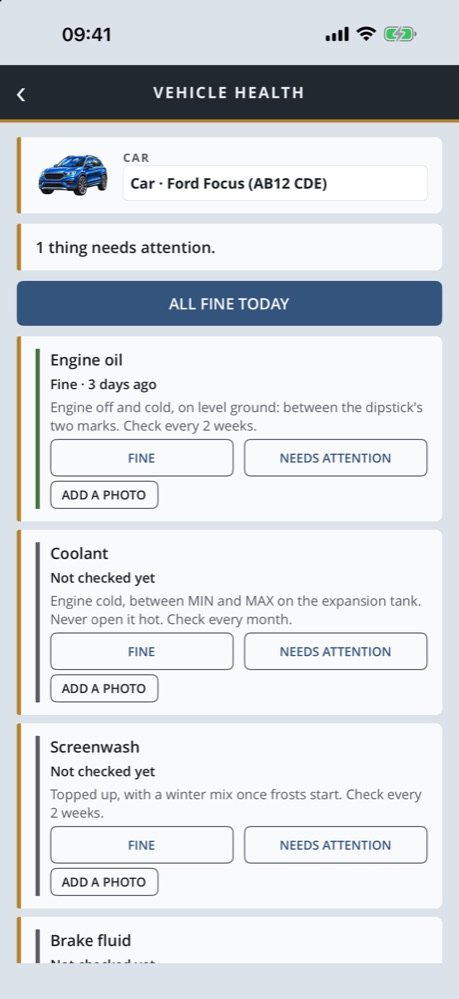
In the app
Drive and Maintain keeps the dates that matter, including a shorter licence's review date, with reminders.
MOT, tax, insurance and service reminders
Reminders before every date runs out, mileage and fuel tracked with your real MPG, and the service history kept, for every vehicle you look after.