 Drive and Maintain
A collision is shaking, even a small one. Knowing what to do beforehand makes it far easier to get right at the time.
First: safety
- Stop somewhere safe, put the hazard lights on, and turn the engine off.
- If anyone is injured, or the road is blocked or dangerous, call 999.
- On a motorway, get everyone out on the left, behind the barrier if it's safe.
What the law requires
If you're involved in a collision that causes injury or damage to another vehicle, property or certain animals, you must stop. You must give your name and address, the vehicle owner's name and address, and the registration to anyone with reasonable grounds to ask.
If you don't exchange details at the scene, you must report it to the police as soon as reasonably possible, and within 24 hours. If someone is injured, you must also produce your insurance details.
What to note
- Other drivers: names, addresses, phone numbers, registrations, makes and colours, and their insurer.
- Witnesses: names and phone numbers.
- Where and when: the road, the junction, the time, the weather and the light.
- What happened: a quick sketch of the positions and directions.
- Photos: the vehicles, the damage, the road, the signs.
What not to do
Don't admit liability or apologise in a way that sounds like it, and don't agree to sort it out privately before you've thought it through.
Afterwards
Tell your insurer as soon as you can, even if you don't plan to claim: most policies require it.
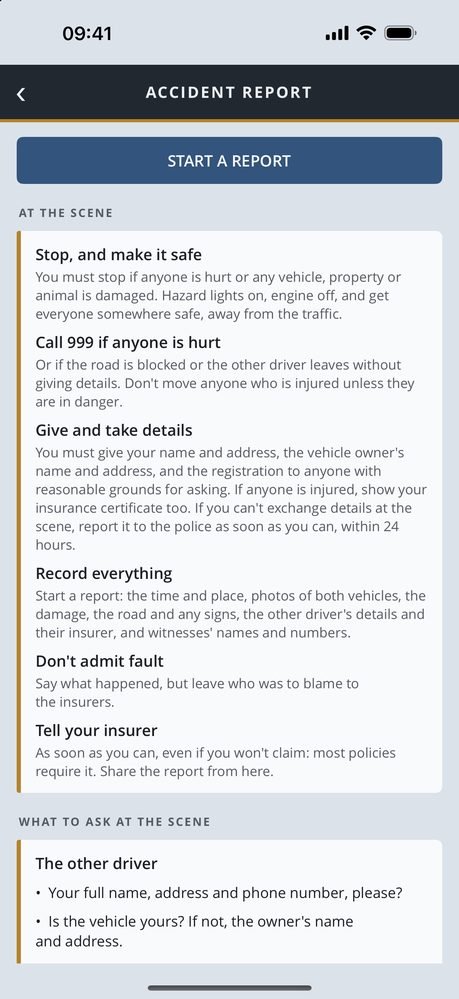
In the app
Drive and Maintain's Accident report takes you through it at the scene, with what to note and ask, and keeps the details and photos together.
MOT, tax, insurance and service reminders
Reminders before every date runs out, mileage and fuel tracked with your real MPG, and the service history kept, for every vehicle you look after.