 Drive and Maintain
It's easy to overload a van without realising: a few bags of plaster, a toolbox and a passenger add up fast. An overloaded van is harder to steer and stop, wears faster, and is illegal.
The weights
- Gross vehicle weight (GVW), also called the maximum authorised mass (MAM): the most the van may weigh fully loaded, including the driver, passengers, fuel and load.
- Kerb weight: the van empty, ready to drive.
- Payload: what you can carry. Roughly, the gross weight minus the kerb weight, and minus the driver and passengers.
- Axle limits: the most each axle may carry. You can be within the gross weight and still overload an axle, if the load is all at the back.
Where to find them
On the VIN plate, usually inside the door or under the bonnet, and in the handbook. Note that the brochure's payload figure is often for a basic model with nothing fitted: racking, a tow bar and accessories all eat into it.
Why it matters
- Braking and steering get worse, and tyres can fail.
- You can be stopped and fined, and ordered not to drive on until the load is reduced.
- Your insurance may not cover an overloaded vehicle.
- Your licence matters too: a standard car licence covers vehicles up to 3,500 kg gross weight.
Check it
If in doubt, use a public weighbridge: weigh the loaded van, and each axle.
In the app
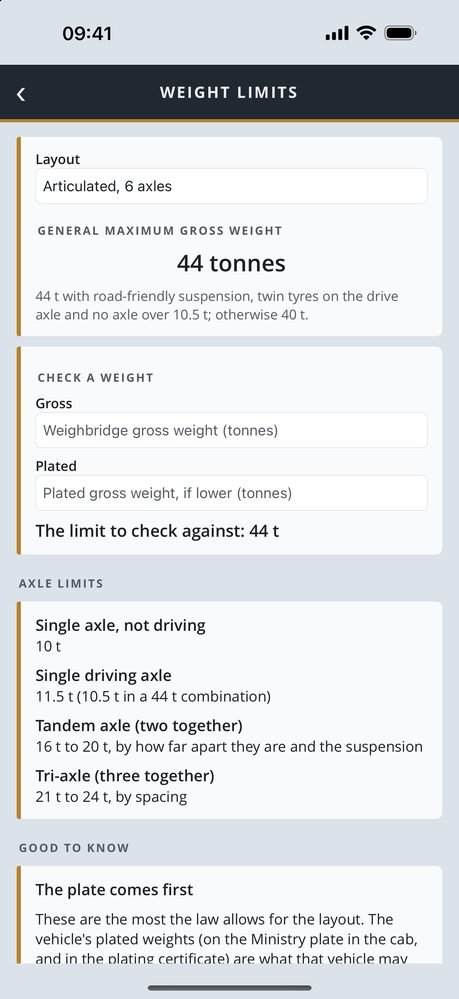
Drive and Maintain shows weight limits by layout and axles, and keeps each vehicle's weights to hand.
Drive and Maintain for iPhone
MOT, tax, insurance and service reminders
Reminders before every date runs out, mileage and fuel tracked with your real MPG, and the service history kept, for every vehicle you look after.