 Drive and Maintain
Many van drivers assume they have the same limits as cars. Most don't.
Vans up to 7.5 tonnes
For goods vehicles with a maximum laden weight of up to 7.5 tonnes, which includes most vans:
- Built-up areas: 30 mph (or as signed).
- Single carriageways: 50 mph.
- Dual carriageways: 60 mph.
- Motorways: 70 mph (60 if articulated or towing).
So on a national speed limit single carriageway, a van's limit is 50, not 60, and on a dual carriageway, 60, not 70.
Car-derived vans
Car-derived vans, small vans based on a car, such as some versions of small hatchbacks, have the same limits as cars. The V5C and the manufacturer can confirm whether yours is one.
Dual-purpose vehicles
Some vehicles, such as certain double-cab pickups and crew vans, may count as dual-purpose and use car limits, depending on their weight and design. Check carefully: the rules are detailed.
Why it matters
Speed cameras and police know the limits for vans. Driving at a car's limit in a van can mean a speeding fine and points.
Lorries
Goods vehicles over 7.5 tonnes have lower limits again.
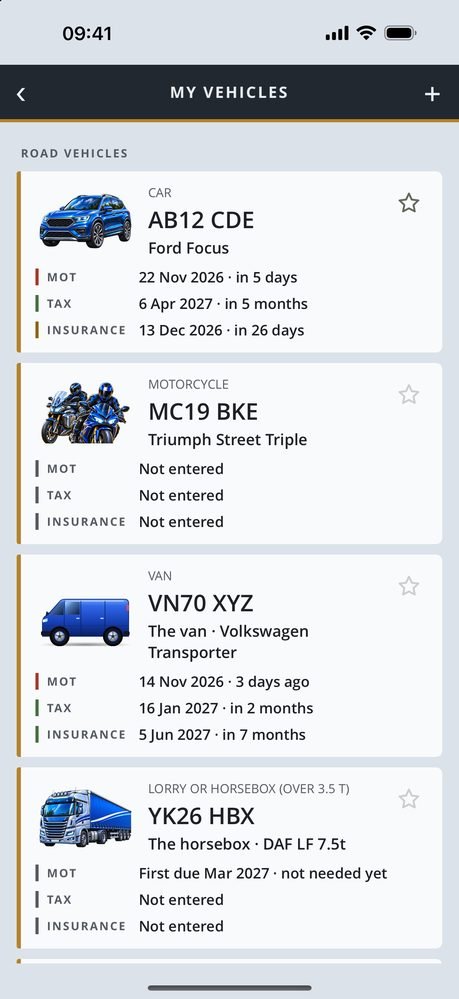
In the app
Drive and Maintain knows what kind of vehicle each of yours is, and rules abroad gives the limits for your vehicle in other countries.
MOT, tax, insurance and service reminders
Reminders before every date runs out, mileage and fuel tracked with your real MPG, and the service history kept, for every vehicle you look after.