 Drive and Maintain
Many cars switch the engine off when you stop in traffic, and restart it when you press the clutch or lift off the brake. It's called stop-start.
Why it's there
An engine idling in traffic burns fuel and makes emissions for nothing. Stop-start saves fuel, especially in town.
Why it doesn't always work
The car only stops the engine when conditions are right. It may stay running when:
- the engine is still warming up;
- the battery is low or cold;
- the air con or heater is working hard, or the windscreen's demisting;
- the driver's door or seat belt is undone;
- the car is on a steep slope; or
- the system detects a fault.
If it never works any more, the battery is often the cause.
Does it wear the engine?
Cars with stop-start have stronger starter motors, batteries and bearings designed for it.
Turning it off
Most cars have a button to turn it off for that journey. It usually comes back on next time.
Batteries
Stop-start cars need the right type of battery: EFB or AGM.
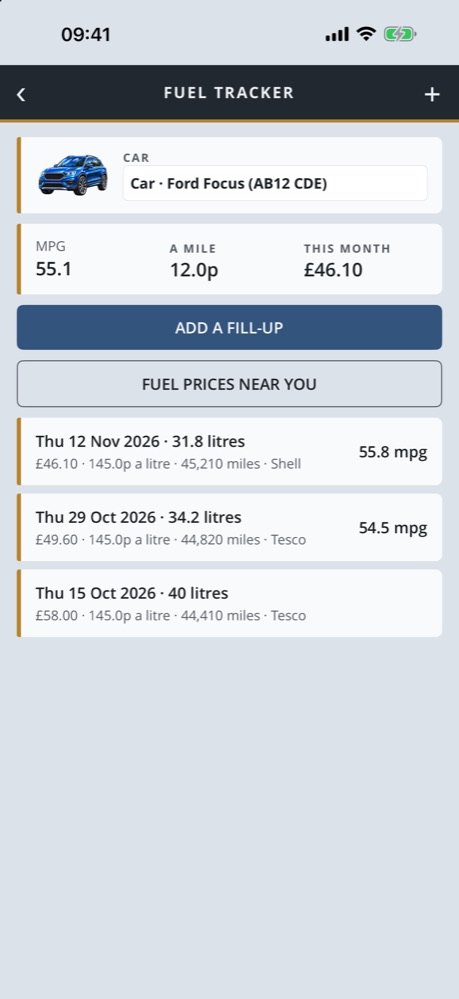
In the app
Drive and Maintain keeps each vehicle's fill-ups and MPG, so you can see what your driving really uses.
MOT, tax, insurance and service reminders
Reminders before every date runs out, mileage and fuel tracked with your real MPG, and the service history kept, for every vehicle you look after.