 Drive and Maintain
There are several kinds of speed camera on UK roads. The simplest way to deal with all of them is to stick to the limit.
Fixed cameras
Usually yellow boxes by the road. They measure speed as you pass, using radar or markings on the road.
Average speed cameras
Cameras at the start and end of a stretch (and often in between) record your number plate and work out your average speed between them. Slowing down only at the cameras doesn't work.
Mobile cameras
Used from vans or by officers at the roadside, often at places with a history of crashes or complaints.
Red light and other cameras
Some cameras catch vehicles going through red lights, using bus lanes, or blocking box junctions.
After a camera
If you're caught, the registered keeper should normally receive a notice of intended prosecution within 14 days. The keeper must then say who was driving.
What happens
Depending on the speed and circumstances: a speed awareness course (offered for some minor offences), a fixed penalty with points, or court.
The point of them
Cameras are usually placed where speed has caused crashes. Watching the limit there, and everywhere, is the point.
In the app
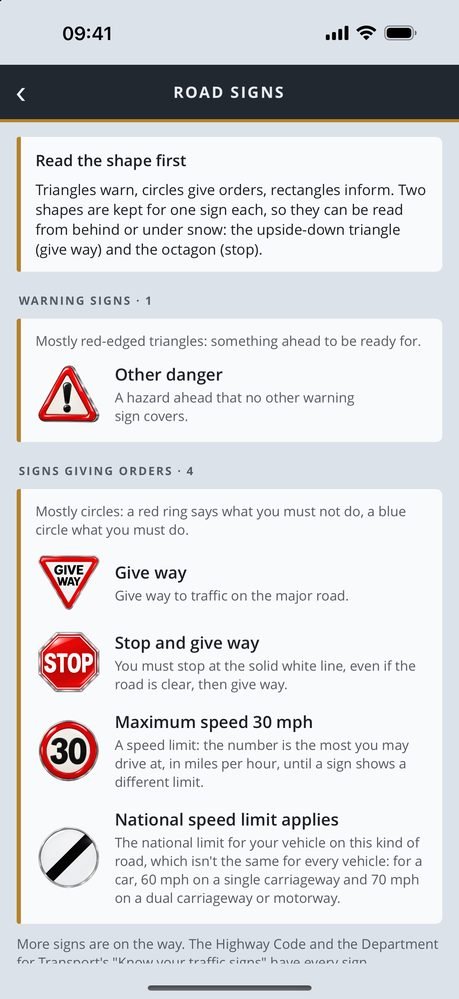
Drive and Maintain has the road signs, warning signs and signs giving orders, and the road quiz to test yourself.
MOT, tax, insurance and service reminders
Reminders before every date runs out, mileage and fuel tracked with your real MPG, and the service history kept, for every vehicle you look after.