 Drive and Maintain
Everyone has watched the fuel warning light and done the maths. Running out is stressful, sometimes dangerous, and can cost more than the fuel.
Why it matters
- Stopping on a busy road, with no fuel to move off again, is dangerous, especially on a motorway or a road without a hard shoulder.
- On a diesel, running dry can let air into the fuel system: the engine may not restart until it's bled, which can need a mechanic.
- The fuel pump is often cooled by the fuel around it, and sediment can sit at the bottom of the tank. Running habitually low isn't good for either.
- On an electric car, running down to nothing means a recovery truck, not a can of fuel.
The range figure isn't a promise
The miles left on the dashboard is an estimate based on recent driving. Hills, speed, cold, a load or a trailer can cut it quickly.
Plan the stops
- On a long journey, plan to fill up at about a quarter of a tank.
- Know where the fuel stations are, particularly on rural roads and at night, when some close.
- Motorway services are convenient but often dearer: filling up before you join can save money.
If you do run out
Get somewhere safe: the hard shoulder or an emergency area on a motorway, with the hazards on and everyone behind the barrier. Call your breakdown cover. Never walk along a motorway with a can.
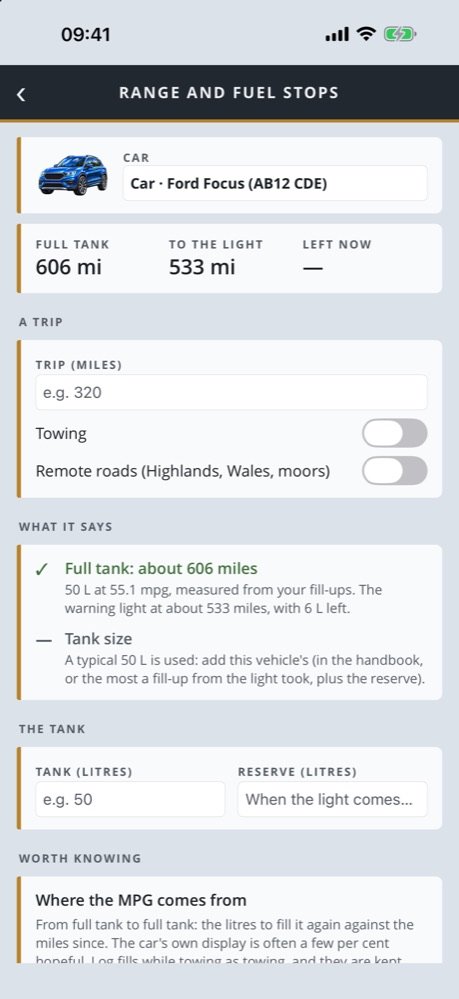
In the app
Drive and Maintain shows the range and the fuel stops for a journey, and the MPG from your own fill-ups.
Drive and Maintain for iPhone
MOT, tax, insurance and service reminders
Reminders before every date runs out, mileage and fuel tracked with your real MPG, and the service history kept, for every vehicle you look after.