 Drive and Maintain
Before your foot touches the brake, the car is still moving at full speed. That's the thinking distance, and it depends on your reaction time.
The Highway Code's figure
The stopping distances in the Highway Code assume a reaction time of about two-thirds of a second. At 70 mph, that's 21 metres travelled before the brakes even start working.
What slows you down
- Tiredness: one of the biggest factors.
- Distraction: a phone, a passenger, the radio, a sat nav.
- Alcohol and drugs, including some medicines.
- Age: reactions tend to slow as we get older, though experience helps.
- Surprise: you react faster to what you're expecting.
Buy yourself time
You can't do much about reaction time in the moment, but you can give yourself more time:
- leave a bigger gap: at least two seconds, more in the wet;
- look further ahead, so you see hazards earlier;
- slow down where something could happen: near schools, parked cars, junctions; and
- cover the brake when a hazard is developing.
Test yourself
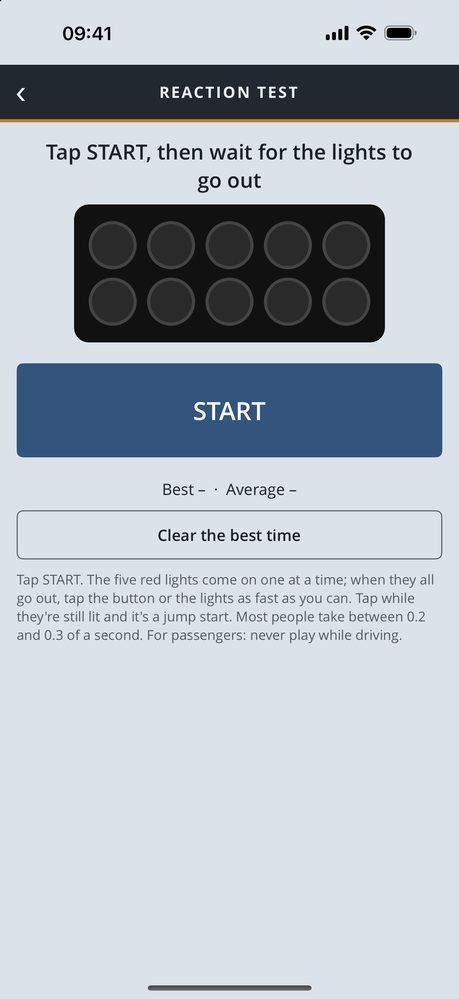
A reaction test is fun, and a useful reminder of how long a fraction of a second really is.
In the app
Drive and Maintain's reaction test times you from its start lights, and its stopping distances show how far you'd travel at every speed.
MOT, tax, insurance and service reminders
Reminders before every date runs out, mileage and fuel tracked with your real MPG, and the service history kept, for every vehicle you look after.