 Drive and Maintain
Overtaking on a single carriageway means using the other side of the road, briefly, at speed. It's one of the riskiest manoeuvres there is.
Ask first
- Is it necessary? How much time will it really save?
- Can I see far enough ahead to be sure it's clear for the whole manoeuvre?
- Is there room to get back in?
- Is the vehicle ahead about to turn, or overtake something itself?
If there's any doubt, don't.
When you mustn't
- Where there's a solid white line on your side of the road.
- On the approach to a junction, a bend, the brow of a hill or a pedestrian crossing.
- Where there are No overtaking signs.
- Where you'd have to cross into a bus or cycle lane in its hours.
Doing it
- Keep a safe distance back, so you can see past.
- Check mirrors, including the blind spot. Is anyone overtaking you?
- Signal, and move out when it's clear.
- Pass quickly, but within the speed limit.
- Move back when you can see the vehicle in your mirror, without cutting in.
Cyclists and horses
Leave at least 1.5 metres passing cyclists at up to 30 mph, more at higher speeds, and at least 2 metres passing horses, at under 10 mph. If you can't, wait.
Being overtaken
Don't speed up. Ease off if needed, to let them back in.
In the app
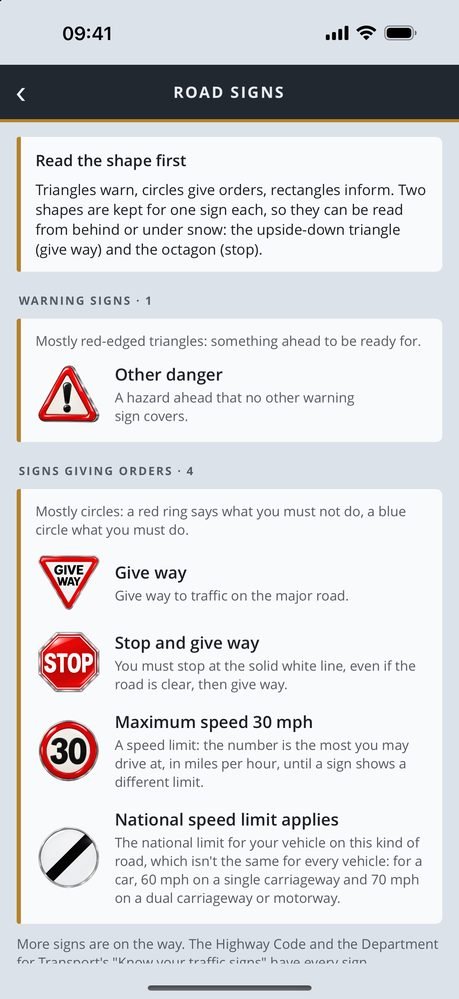
Drive and Maintain has the road signs and the road quiz to keep your knowledge fresh.
Drive and Maintain for iPhone
MOT, tax, insurance and service reminders
Reminders before every date runs out, mileage and fuel tracked with your real MPG, and the service history kept, for every vehicle you look after.