 Drive and Maintain
An MOT checks that a vehicle meets the legal standards for safety and emissions on the day. It isn't a service: nothing's fixed unless you ask.
What's tested
Among other things: lights, brakes, steering, suspension, tyres and wheels, seat belts, the body and structure, exhaust and emissions, mirrors, wipers and washers, the horn, the registration plates, the VIN, and warning lights. The engine, clutch and gearbox aren't checked for condition.
How defects are graded
- Dangerous: a direct risk to safety. Fail, and you mustn't drive it away.
- Major: may affect safety or the environment. Fail.
- Minor: no significant effect. Pass, but get it fixed.
- Advisory: something to keep an eye on.
Can I drive a car that's failed?
Only if your current MOT is still valid and there are no dangerous defects, and the car is roadworthy: for example, to a garage for repairs. Otherwise, only to a pre-booked MOT or repairs.
Retests
If the car stays at the test centre for repairs and is retested within 10 working days, there's usually no fee for a partial retest. Some items can be retested free if you bring it back by the end of the next working day.
Before the test
Check the easy things yourself: bulbs, wipers, screenwash, tyres, the horn, and number plates.
Book early
You can have an MOT up to a month (less a day) before it runs out and keep the same date.
In the app
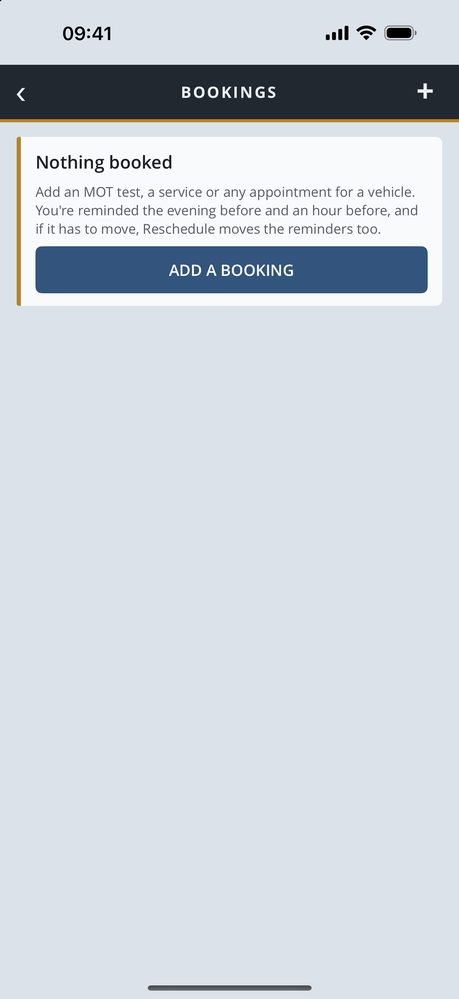
Drive and Maintain keeps bookings and reschedules, every MOT's results and advisories, and reminds you before each MOT is due.
MOT, tax, insurance and service reminders
Reminders before every date runs out, mileage and fuel tracked with your real MPG, and the service history kept, for every vehicle you look after.