 Drive and Maintain
Private practice with family or friends, alongside lessons, is how most learners get ready for their test. Here's what the supervisor needs to know.
Who can supervise
To supervise a learner driving a car, you must:
- be 21 or over;
- be qualified to drive that kind of vehicle; and
- have held a full licence for it for at least three years.
You must be fit to drive, and you can't use a hand-held phone while supervising, just as you couldn't while driving.
The car
- L plates, front and back (or D plates in Wales).
- Insurance that covers the learner: either on the owner's policy, or a separate learner policy.
- The car must be taxed and have a valid MOT, and be roadworthy.
Motorways
Learners can drive on motorways, but only with an approved driving instructor, in a car with dual controls. Family and friends can't take them.
How much practice
DVSA's figures suggest learners who pass have, on average, around 45 hours of lessons and 22 hours of private practice. Practice in different conditions counts: in the dark, in the rain, in town, on country roads and dual carriageways.
Keep a log
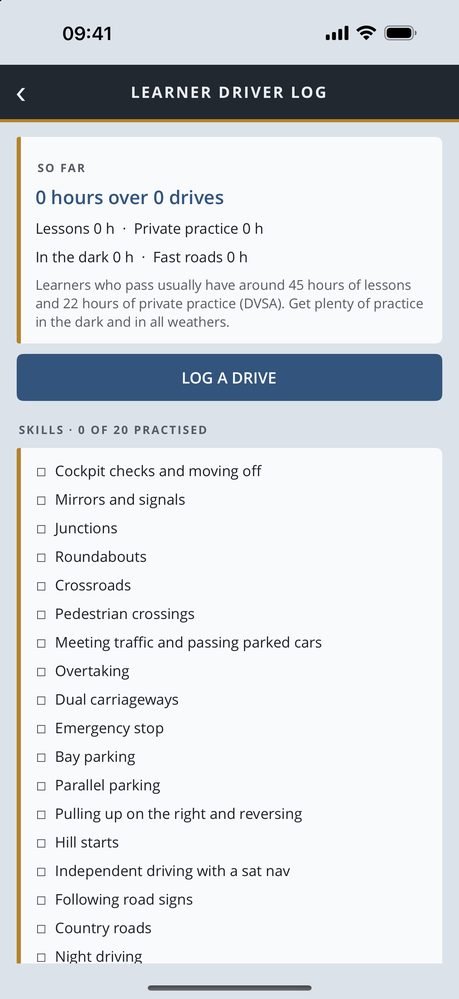
A log of each drive (how long, what conditions, what was practised) shows what's been covered and what still needs work.
In the app
Drive and Maintain's learner driver log keeps each practice drive or lesson with its minutes, the supervisor, the conditions and the skills practised from a list of twenty, the hours so far (lessons and private practice, in the dark and on fast roads), the skills still to practise, and the rules for supervising.
MOT, tax, insurance and service reminders
Reminders before every date runs out, mileage and fuel tracked with your real MPG, and the service history kept, for every vehicle you look after.