 Drive and Maintain
The excess is the amount you pay towards any claim. The insurer pays the rest.
Compulsory excess
Set by the insurer. You can't change it, and it can be higher for young or new drivers, or for some claims such as windscreens.
Voluntary excess
An extra amount you choose to add. A higher voluntary excess usually means a lower premium.
The total excess
You pay both added together. A compulsory excess of one amount plus a voluntary excess of another means you pay the sum of both on a claim.
The trap
A high excess looks good on the quote, but you have to be able to afford it if you claim. And small claims become pointless: if the repair costs less than the excess, you get nothing.
Different excesses
Policies can have different excesses for windscreen claims, theft, or if someone else is driving.
Excess protection
Some policies offer excess protection as an add-on, refunding the excess after a claim. Check whether it's worth the cost.
Compare like with like
When comparing quotes, compare the total excess, not just the price.
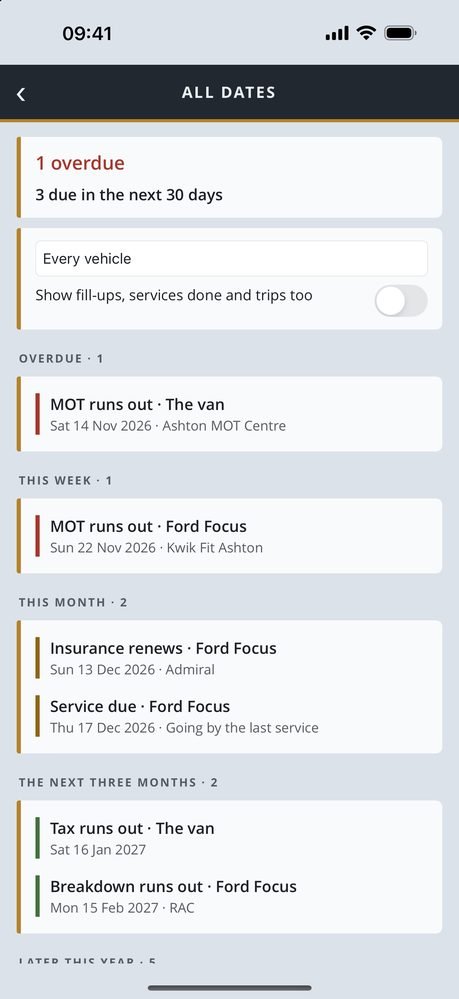
In the app
Drive and Maintain keeps each vehicle's insurance with its renewal date, and reminds you before it renews.
MOT, tax, insurance and service reminders
Reminders before every date runs out, mileage and fuel tracked with your real MPG, and the service history kept, for every vehicle you look after.