 Drive and Maintain
Strong winds don't make headlines like snow, but they cause plenty of incidents.
Where gusts hit hardest
- Exposed roads: moors, coasts, high bridges.
- Gaps: between buildings, at the end of a hedge, at the edge of a wood, under a bridge.
- Overtaking a lorry: you pass from its shelter into the wind.
Who's most affected
- High-sided vehicles: vans, lorries, minibuses, motorhomes.
- Towing: caravans and trailers can be pushed off line or start to snake.
- Motorbikes and cyclists: they can be blown into your path. Give them extra room.
How to drive
- Slow down: it gives you time to react.
- Keep both hands on the wheel, with a firm but relaxed grip.
- Anticipate gusts at gaps and bridges.
- Leave more room to the side of vehicles that may be blown about.
Towing and high-sided vehicles
Consider whether to travel at all in very strong winds. Some bridges close to high-sided vehicles in high winds: check before you go.
Debris
Watch for branches and fallen trees, especially on rural roads, and things blown off lorries and building sites.
Parking
Avoid parking under trees.
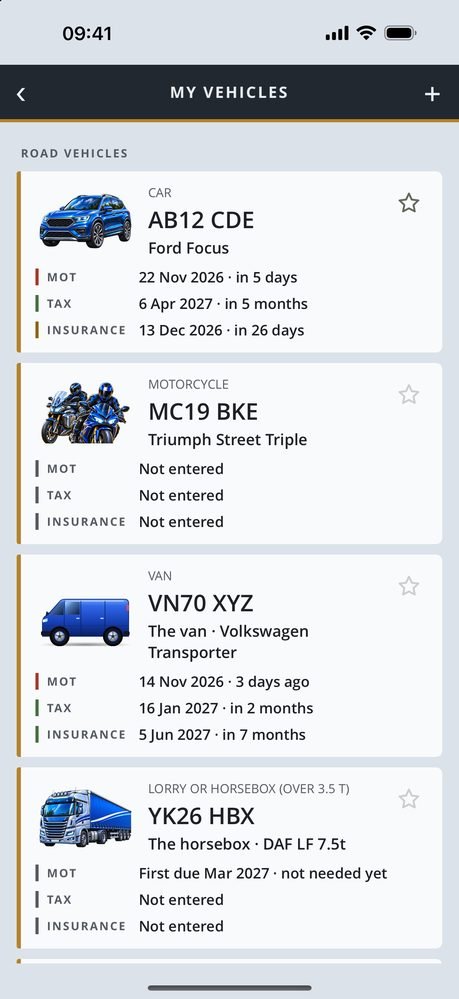
In the app
Drive and Maintain knows what kind of vehicle each of yours is, so its checks and advice fit a van, a motorhome or a motorbike, not just a car.
Drive and Maintain for iPhone
MOT, tax, insurance and service reminders
Reminders before every date runs out, mileage and fuel tracked with your real MPG, and the service history kept, for every vehicle you look after.