 Drive and Maintain
Eyesight changes slowly, so it's easy not to notice it getting worse. The law sets a clear standard for every driver.
The standard
You must be able to:
- read a car number plate from 20 metres (about five car lengths) in good daylight, with glasses or contact lenses if you need them;
- meet the visual acuity standard of at least decimal 0.5 (6/12) with both eyes open, or one eye if you only have one; and
- have an adequate field of vision.
If you need glasses or lenses to meet it, you must wear them every time you drive.
Check yourself
Count five car lengths along a street and read a number plate. If you can't, see an optician before you drive again.
Have your eyes tested
At least every two years, or as your optician advises, and sooner if you notice any change. An eye test can also pick up conditions such as glaucoma early.
What to tell DVLA
You must tell DVLA about certain eye conditions that affect both eyes, or your field of vision, such as glaucoma, cataracts in some cases, and others. GOV.UK lists them. The police can ask you to read a number plate at the roadside, and your licence can be revoked straight away if you can't.
Night driving
If you find night driving harder, with glare or haloes, mention it to your optician.
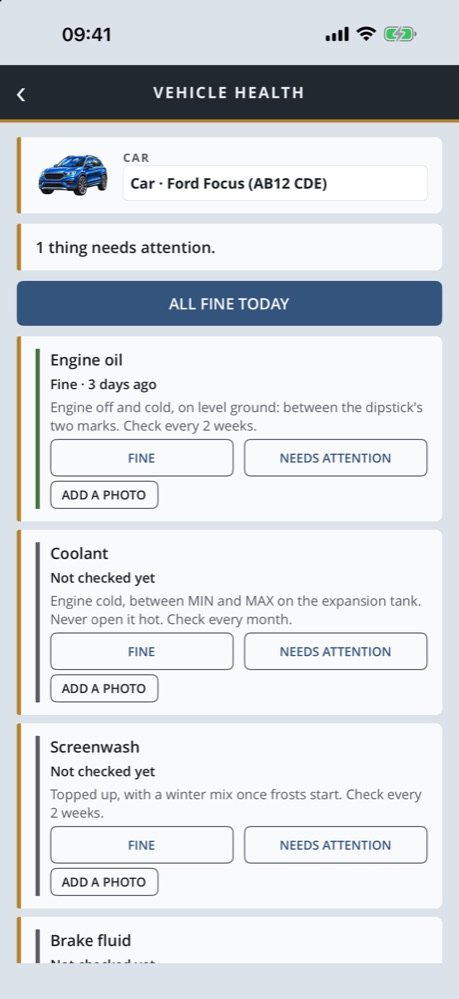
In the app
Drive and Maintain keeps the dates that matter for you as well as your vehicles, with reminders before each one.
MOT, tax, insurance and service reminders
Reminders before every date runs out, mileage and fuel tracked with your real MPG, and the service history kept, for every vehicle you look after.