 Drive and Maintain
Your nose can catch problems early. Here's what common smells can mean.
Sweet, like syrup
Usually coolant (antifreeze) leaking: from the radiator, a hose, or the heater matrix inside the car, which can also mist the windows. Check the coolant level when cold, and get it looked at.
Burning oil
Oil leaking onto the hot exhaust or engine. Look for drips, and check the oil level.
Burning rubber or hot smell
- A slipping belt.
- A dragging brake: one wheel hotter than the others after a drive.
- After a hard drive in the hills, hot brakes can smell. If it persists, get them checked.
Clutch burning
A sharp, acrid smell after a hill start or heavy traffic: a slipping clutch.
Rotten eggs
Often the catalytic converter, or sometimes the fuel. Get it checked.
Petrol
A strong petrol smell, especially after the car's been parked, can mean a fuel leak. That's a fire risk: don't drive it, and get it checked.
Electrical burning
A burning plastic smell, sometimes with smoke from the dashboard: stop safely, turn off the engine, and get everyone out.
Musty
From the vents: a damp air con system or a clogged cabin filter. In the car: a water leak somewhere.
When in doubt
Smoke, a strong fuel smell, or an electrical burning smell: stop and get out.
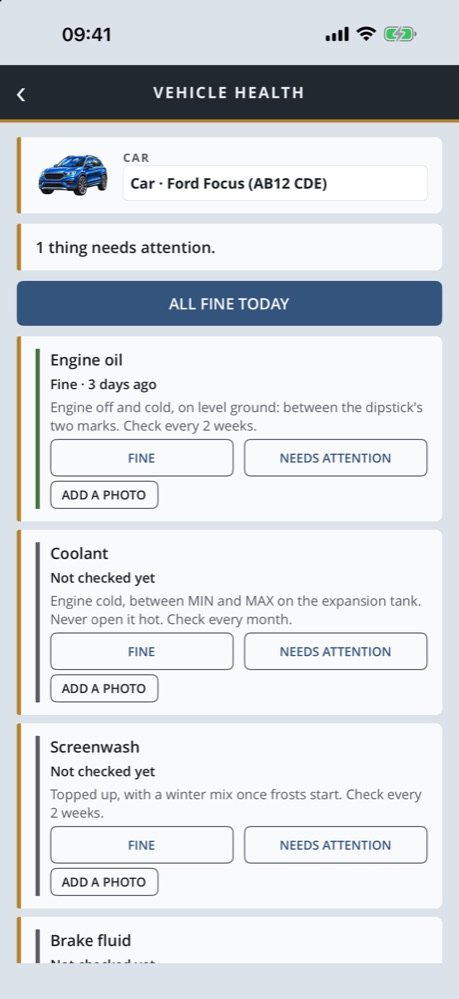
In the app
Drive and Maintain's vehicle health lists the checks for each kind of vehicle.
MOT, tax, insurance and service reminders
Reminders before every date runs out, mileage and fuel tracked with your real MPG, and the service history kept, for every vehicle you look after.