 Drive and Maintain
Brakes wear gradually, so it's easy to get used to them getting worse. These are the signs to act on.
The noises
- Squealing when you brake: many pads have a wear indicator that squeals when they're getting thin. It can also be dust or damp, but get it checked.
- Grinding or scraping: the pads may be worn down to the metal and damaging the discs. Get it seen to straight away.
The feel
- A soft or spongy pedal, or one that goes further down than it did: air or a leak in the hydraulics, or low brake fluid. Don't drive on.
- Pulling to one side when braking: a sticking caliper or uneven wear.
- Vibration through the pedal or steering wheel: warped discs.
- Longer stopping than it used to be.
The lights
A red brake warning light (a circle with an exclamation mark) that isn't the handbrake can mean low brake fluid. An ABS light means the anti-lock system has a fault: normal braking still works, but get it checked.
Brake fluid
Brake fluid absorbs water over time, which lowers its boiling point. Most makers say to change it every two years or so, whatever the mileage.
At the MOT
Brakes are one of the most common MOT failure areas. A check before the test can save a retest.
In the app
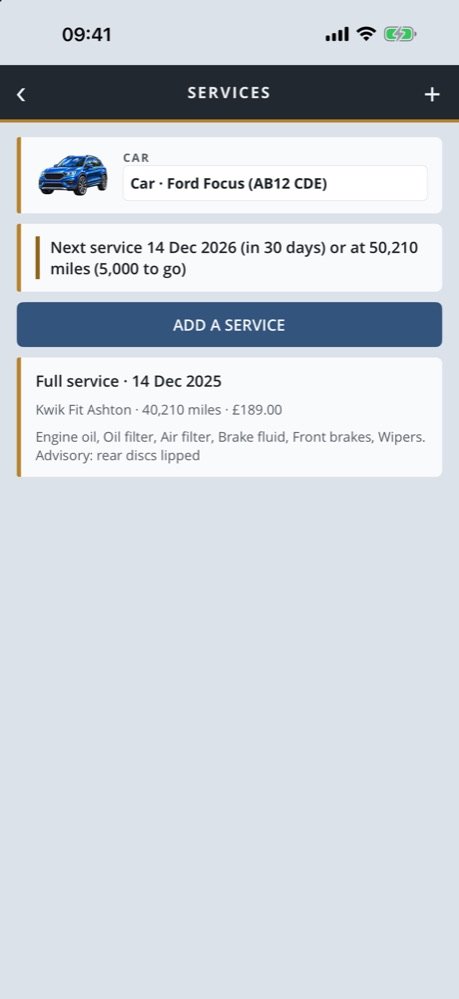
Drive and Maintain keeps each service and its jobs, brake pads and fluid included, with the next one due by date or miles.
MOT, tax, insurance and service reminders
Reminders before every date runs out, mileage and fuel tracked with your real MPG, and the service history kept, for every vehicle you look after.